Industry Reports
Delivering the 2026 Holiday Shopping Season
This report explores how retail leaders are preparing for the 2026 holiday season. It reflects the views of 100 senior retail decision-makers across operations, finance, eCommerce, and CX roles, as well as how those views compare to the views of more than 1,300 shoppers who answered a consumer survey. Here, readers will gain a broad picture of how holiday readiness and shopper expectations are converging at a time when speed, value, trust, and cost are top of mind.
Mastering the Marketplace in Retail and eCommerce
As digital commerce evolves, the ability to navigate multi-platform selling environments like marketplaces has become a key to success. Organizations that master marketplace dynamics like inventory coordination, data integration, customer engagement, and brand storytelling can position themselves to capture incremental revenue streams. This will allow them to expand their market reach without significant infrastructure investments. The results of the study suggest retailers must develop sophisticated marketplace capabilities that balance platform-specific optimization with seamless omnichannel integration. Using the right combination of technology and strategy, they can maintain profitable unit economics while supporting authentic customer relationships.
Rewriting the Rules on Returns: How Consumer Attitudes, AI and Abuse are Shaping Global eCommerce
Returns have become the new battleground in ecommerce, where consumer expectations, margin pressure, fraud, and emerging technology converge. Nonetheless, shoppers aren't universally opposed to policy reform, and many consumers would even prefer that merchants adopt stricter return policies. Retailers are responding by tightening rules, shortening windows, transitioning to store credit, and investing in AI-driven fraud detection. The path forward lies in turning data and transparency into a dual advantage: protecting margins while improving customer trust.

Retailers Share Their Plans for Conversion and Cart Recovery in 2026
The industry has grown confident with retargeting as a practice, and it now employs advanced AI solutions to make campaigns more effective. However, persistent execution challenges around cross-channel coordination, cart recovery, and cookie deprecation remain. This report explores how organizations are using retargeting campaigns to re-engage visitors, recover lost revenue, and improve return on ad spend. Readers will find a clear picture of where retargeting programs are strongest today and how organizations seeing positive results are executing their strategies.
Personalized Channel Activation in Retail & eCommerce: How Alignment and Integration Support Cross-Channel Execution
This report explores how retail and eCommerce organizations are approaching cross-channel personalization and where many are still falling short. Based on insights from 100 industry leaders, the study examines current personalization capabilities, investment priorities, and the operational challenges limiting scalability. The findings reveal that while most organizations can personalize within individual channels, few have built the infrastructure needed to deliver truly unified customer experiences.
Beyond Gen Z - How Retailers are Adapting to the Next Wave of Consumer Expectations
Retailers find themselves at a crossroads as they work to understand and connect with Gen Z shoppers and the generations that follow. This report examines where brands stand today in their efforts to engage these consumers, revealing significant gaps between intention and execution. While most organizations recognize the importance of Gen Z engagement, few feel confident in their current approaches. The findings illuminate both the challenges retailers face and the emerging opportunities that define success with this demographic, from recommerce programs to values-based marketing.
The Retail AI Revolution Industry-Leading Voices Share How AI Will Reshape the Industry
Nearly all retail and eCommerce organizations have adopted AI capabilities. However, leaders still face challenges with data privacy, implementation costs, and customer trust. Most organizations focus on tactical AI applications rather than strategic maturity. This leaves them vulnerable to emerging technologies like agentic AI systems. Without strategic planning, the gap between current capabilities and readiness will continue to grow. This report explores how leaders are approaching AI planning, governance, and workforce development to realize the technology’s full potential.
Acquisition Email Marketing: The Performance Engine of Top-of-Funnel B2C Growth
Artificial intelligence is rapidly reshaping top-of funnel (TOFU) marketing strategies, empowering brands to achieve unprecedented levels of targeting, personalization, and measurement across digital channels. AI-driven tools now enable marketers to deliver tailored messages at scale. As a result, brands are diversifying their channel mix. While mobile and social media marketing remain top investment priorities for many organizations, the findings in this report suggest that acquisition email marketing is one of the highest performing, and most under-utilized, channels in the AI-powered marketing ecosystem. This report explores marketers’ current top-of-funnel strategies, what channels they are prioritizing, and what role acquisition email marketing will play in achieving TOFU success.

eTail Boston 2025 After the Event Report
This report provides an in-depth look at the groundbreaking strategies, technologies, and insights discussed throughout eTail Boston 2025, including the latest advancements in AI-driven marketing, cross-channel attribution, loyalty, personalization, and content optimization. Each session offered actionable guidance for eCommerce and omni-channel innovators aiming to improve performance and deepen customer relationships in our dynamic industry. We’re thrilled to break down each individual session as part of this robust, year-round resource for retail practitioners everywhere.
Marketing & Advertising Trends in 2026
Organizations are adapting their marketing and advertising strategies to multiple trends as they reshape the marketplace. Artificial intelligence has given rise to new capabilities and efficiencies in marketing campaigns, but it is not without risk. Furthermore, customers have demonstrated that they prefer brands that align with their values and can make a meaningful connection with them. This report offers a clear overview of transformative marketing and advertising strategies shaping how organizations will interact with their customers in 2026. It highlights the evolving tactics and investments that are poised to drive success on owned, unowned, and emerging channels.

The AI video revolution in retail and eCommerce
Video content is now a cornerstone of modern retail and eCommerce marketing, with organizations creating unprecedented volumes of video assets to engage customers across multiple touchpoints. Many organizations now produce fifty to one hundred video assets each month. This shift toward video is being accelerated by artificial intelligence, which marketers can use to enhance video production, translation, and distribution.This report explores how leading retailers and eCommerce brands are using strategic video content and AI-driven interactivity to enhance training and the customer experience. Readers will gain insight into the future of AI-driven video and explore how they can drive measurable results in their own business through video interactivity and an AI-enhanced strategy.
Trust, Transparency, and the Future of Artificial Intelligence in Marketing
Marketing leaders are integrating artificial intelligence into their strategies and operations, with varying degrees of adoption, trust, and success. This report examines how marketing leaders are currently utilizing AI, what objectives brands have set for AI in the coming year, and what factors are influencing marketers’ confidence in AI-powered solutions. The findings reveal a marketing landscape in transition, where professionals recognize AI’s potential benefits, yet maintain healthy skepticism about its impact on their work.

eTail Palm Springs 2025: After The Event Report
Our report reveals the most critical topics discussed at eTail Palm Springs 2025, providing actionable insights for retail and eCommerce leaders navigating a changing marketplace. It explores critical strategies for building brand trust with socially and environmentally conscious consumers, adapting to shifting consumer behavior in a volatile economy, and delivering seamless omnichannel experiences that meet modern shopper expectations. Download your copy today!
The Future of AI in Retail and eCommerce
The following report explores how artificial intelligence (AI) is poised to transform retail and eCommerce over the next three years through innovative use cases and growing implementations. With 85% of the surveyed respondents planning to increase their investments in AI technology in the next year, more and more brands will compete based on their ability to use AI solutions to enhance both internal operations and the customer experience.
Next-Generation Customer Loyalty Strategies
Some retail and eCommerce organizations are facing challenges in adapting existing workflows to new technologies. Others are struggling to personalize the customer experience at scale. Furthermore, while virtually all the respondents believe the post-purchase experience is an important part of their loyalty strategies, many lack key capabilities. This report explores how retail and eCommerce leaders will shape their customer loyalty programs over the next 12 months.
Future Customer Journeys in Retail and eCommerce
This report explores how effectively retail and eCommerce organizations are enhancing the customer journey to drive growth and customer loyalty. Drawing insights from a survey of industry leaders and presenting direct quotes from discussions at eTail Boston 2024, the report highlights key trends driving the future of the retail and eCommerce customer experience. The report also includes a notable case study outlining the use of storytelling and AI-powered personalization to drive meaningful customer shopping experiences. It ends with an analysis of what retail and eCommerce brands plan to do in the next 12 months to enhance customer journeys moving forward.
eTail Boston 2024 After the Event Report
eTail Boston 2024 was a remarkable event, filled with insightful sessions, innovative ideas, and engaging conversations. From Warby Parker's keynote to the final panel with Thousand Fell and Adore Me, speakers inspired attendees to confidently navigate the evolving retail landscape. This post-event report offers a detailed recap, including key highlights and emerging themes. We look forward to continuing the momentum at eTail Palm Springs in February 2025!
The State of Retail and eCommerce in 2025
The retail and eCommerce industry in 2025 stands at a crossroads, shaped by rapid technological innovation, evolving consumer expectations, and persistent operational hurdles. Retail leaders are investing heavily in AI, analytics, and omnichannel strategies, but many still face challenges in translating these investments into measurable business outcomes. This report explores the key trends, priorities, and obstacles shaping the sector, drawing on insights from senior leaders across diverse retail verticals. It also provides actionable recommendations to help organizations bridge the gap between aspiration and transformation, ensuring they remain competitive in a dynamic marketplace.
The Future of AI in Retail and eCommerce: An Analysis of the Current Capabilities, Challenges, and Opportunities of AI in the Industry
In the rapidly evolving landscape of retail and eCommerce, AI is poised to become a pivotal force in reshaping industry standards for customer engagement, operational efficiency, and market competitiveness. This report underscores the critical role of AI-driven insights, automation, and personalization, as facilitated through the integration of Customer Data Platforms with unified data systems. It highlights an understanding that the future of retail and eCommerce will be significantly influenced by technology’s ability to offer nuanced, personalized experiences.
Optimizing Success on eCommerce Marketplaces
This report provides a comprehensive analysis of the current trends, strategies, and challenges faced by retail and eCommerce leaders in the rapidly evolving marketplace landscape. It highlights the significant role of third-party marketplaces in driving sales, with most companies relying heavily on these platforms for a substantial portion of their revenue. Key strategies for optimizing sales include enhancing product listings, leveraging user-generated content, and implementing dynamic pricing and product sampling programs.
Data Best Practices in Retail & eCommerce
While retail and eCommerce organizations recognize the critical importance of effective data management for strategic decisionmaking and personalized customer experiences, many struggle with outdated tools and processes. This report is based on a survey of retail and eCommerce leaders. Ultimately, the results of the study suggest that achieving a comprehensive, collaborative, and technologically advanced data management framework is essential for companies to leverage their data effectively and stay competitive.
The Annual eTail Direct-to-Consumer Report
The DTC model has become a winning strategy for many consumer brands, even those that have traditionally sold all their products via partnerships with retailers. However, the DTC space has become much more crowded. This report explores how the DTC model has evolved and where it stands in today’s retail environment. It also identifies brands’ current DTC strategies and reveals how they are working to address new opportunities and challenges.
How Headless Commerce is Transforming eCommerce
Headless commerce has drastically changed eCommerce by allowing businesses to create an online presence without having to rely on a traditional web-based storefront. Instead, websites and applications can be powered by APIs that enable data like product information and prices to be distributed across channels like mobile apps, voice assistants, and conversational chatbots. This report explores how eCommerce retailers are currently using headless commerce and what challenges they face in optimizing their font-end digital strategy.
eTail D2C Trends Report
Once the purview of startups and disruptor brands, direct-to-consumer (D2C) sales is now an integral part of many manufacturers’ sales strategies. But D2C business is not without its challenges. Last year, some brands also claimed to require a major technology overhaul if they wanted to secure their D2C strategies for the future. This report explores the progress brands have made in their D2C strategies over the past year. It contains insights from D2C leaders as well as benchmarking information regarding technology adoption, strategy deployment, and industry trends.
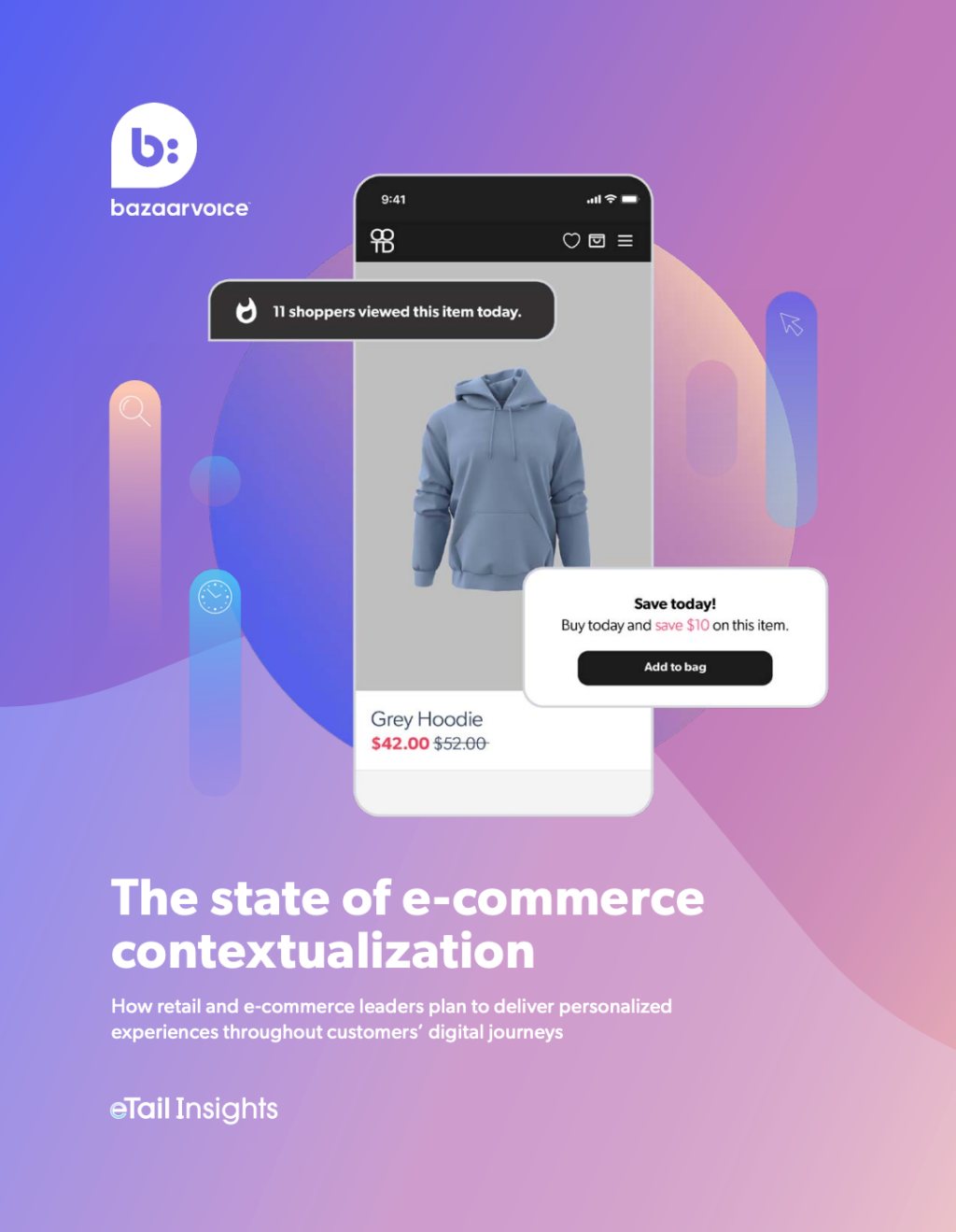
The State of e-Commerce Contextualization
This report is based on a survey of retail leaders, revealing that retail and e-commerce organizations are actively pursuing contextualization, personalization, and onsite experience optimization strategies. While most organizations consider themselves somewhat effective in these areas, there's significant room for improvement.
Consumer Data in Action
This report, based on a survey of marketing leaders at top business to-consumer (B2C) brands, explores the barriers marketers’ encounter in effectively utilizing their customer data. The findings reveal a telling challenge: 81% of marketers rate their technology infrastructure as only adequate for now, partially adequate, or inadequate in supporting data-driven marketing initiatives.
Optimizing Delivery and Fulfillment Through Digital Transformation
This report highlights the critical role of digital tools and logistics platforms in addressing contemporary consumer expectations for convenient and flexible shopping experiences, such as pickup-anywhere and fast ship-to-home delivery. It also emphasizes the adoption of real-time order management software, dedicated staffing for online orders, and analytics for forecasting as key strategies among retailers to enhance operational efficiency and customer satisfaction. One key finding is that all the respondents believe it is at least somewhat important to have data in one location to make actionable fulfillment decisions. This points to the necessity of consolidated data access. It also underscores the importance of an integrated omnichannel platform for agile decision-making
Optimizing Ecommerce Performance with Inventory Management Technology
Struggling with inventory management on Shopify? An investment in SaaS and advanced technologies promises improved forecasting, cost reduction, and sustainability. Elevate efficiency and innovation by investing in easy-to-use inventory solutions today. Download your copy today!